





 Italiano
 Français
 Español
 Deutsch
 AUD
AUD  BRL
BRL  CAD
CAD  CHF
CHF  CNY
CNY  GBP
GBP  INR
INR  JPY
JPY  KRW
KRW  RUB
RUB  THB
THB  USD
USD 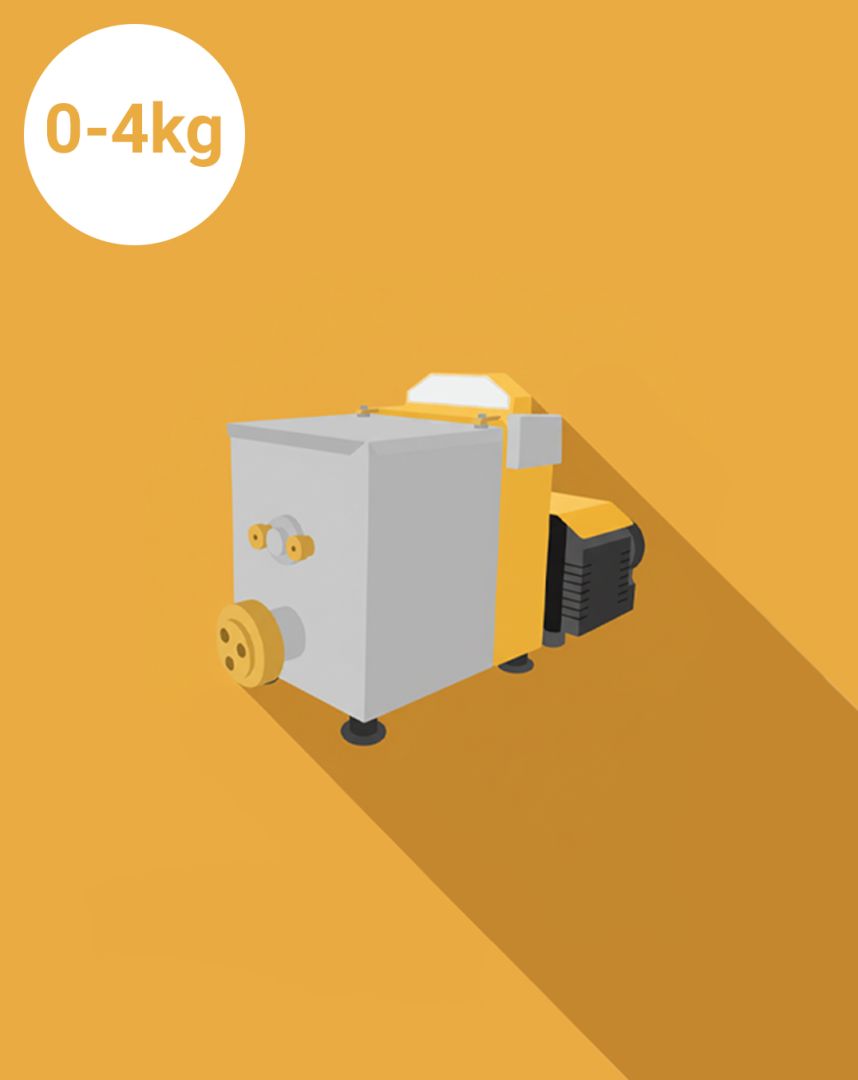
Extruders / Presses
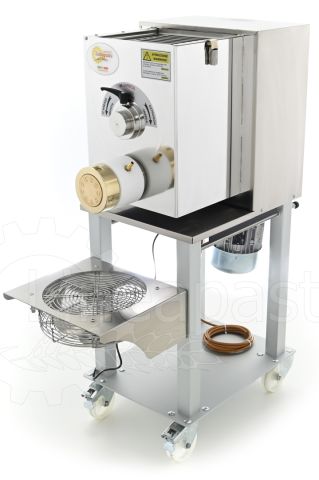
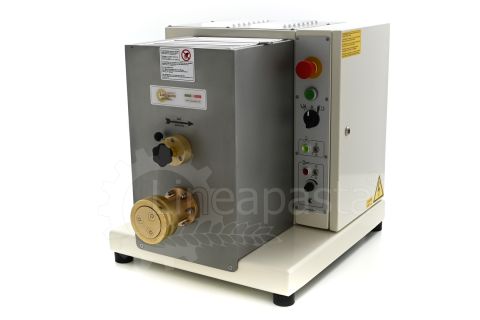
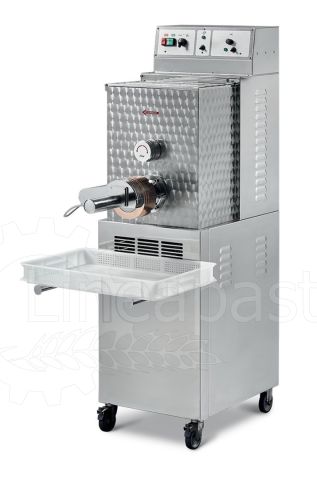
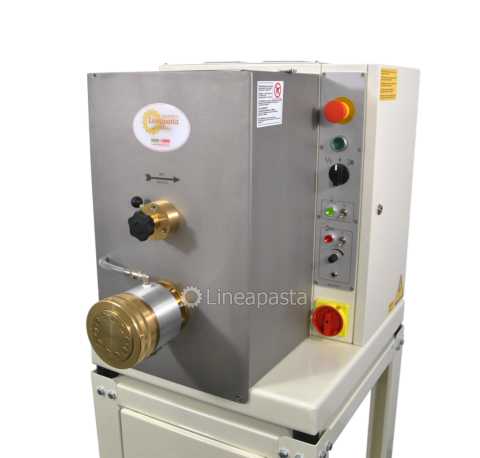
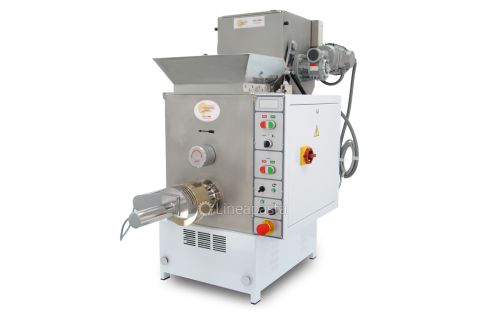
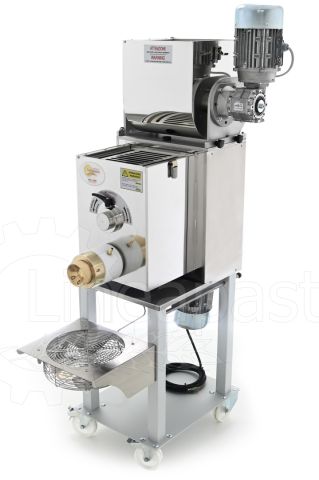
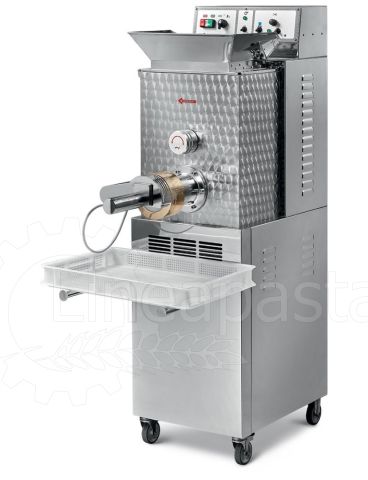
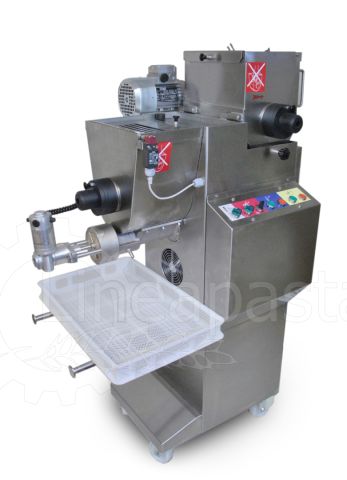
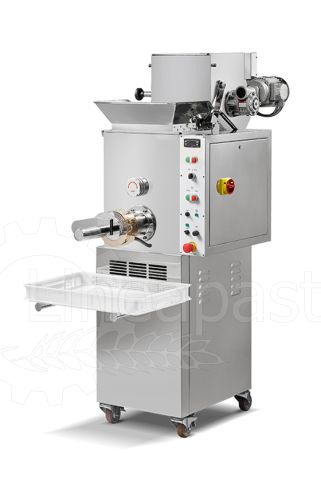
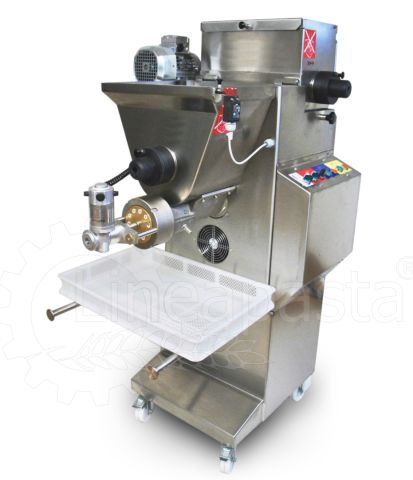
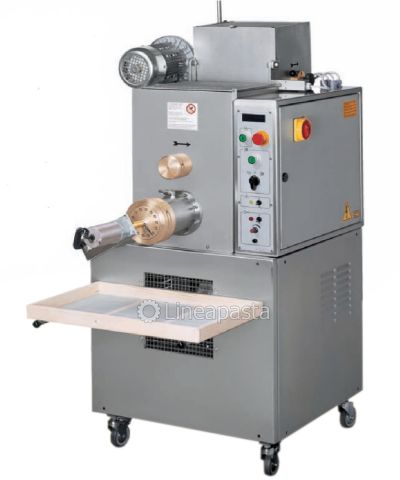
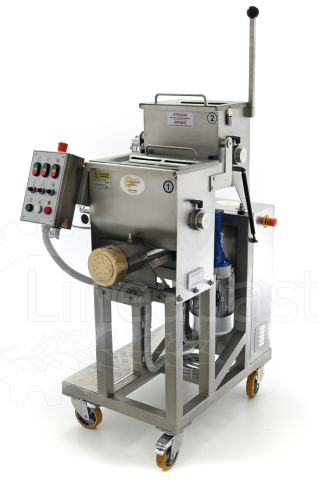
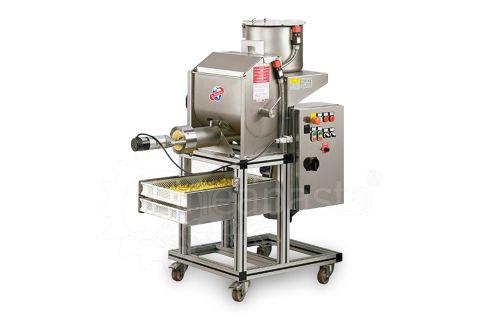
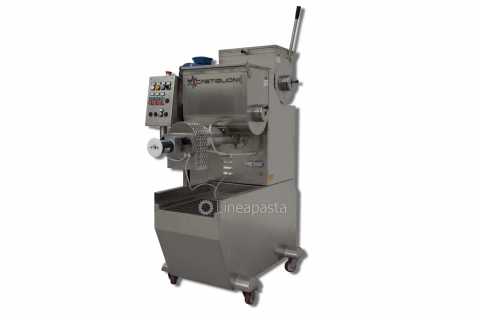
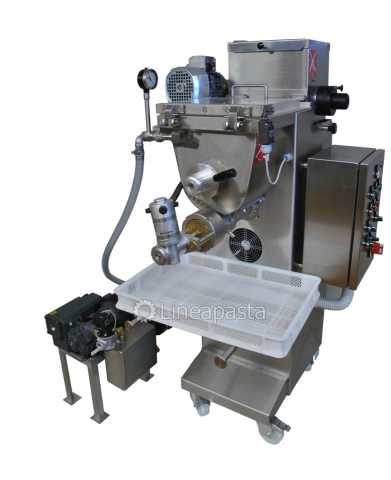
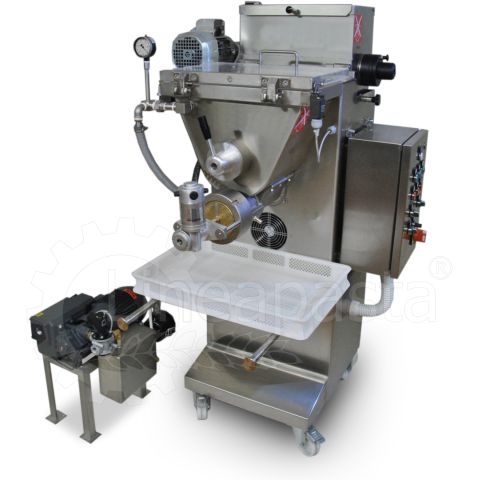
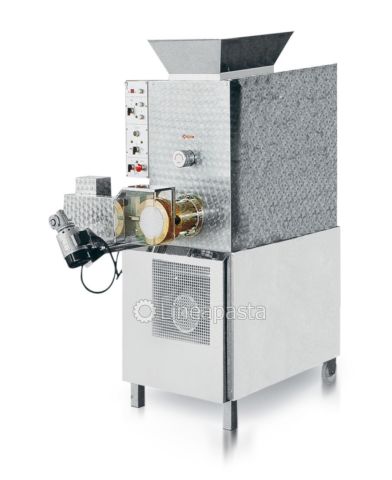
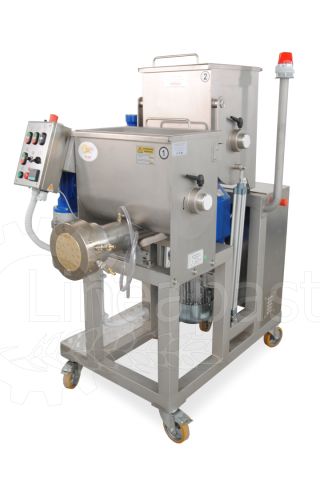
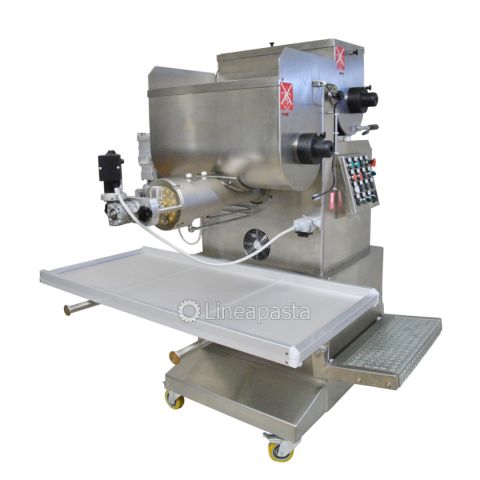
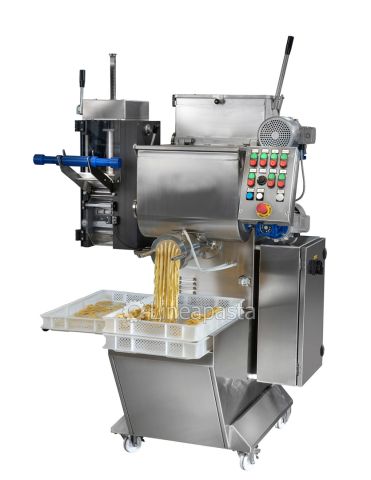
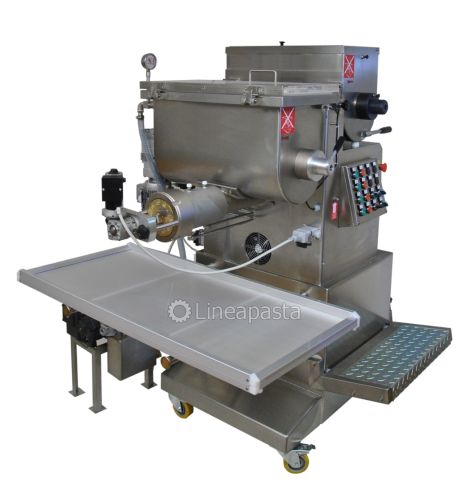
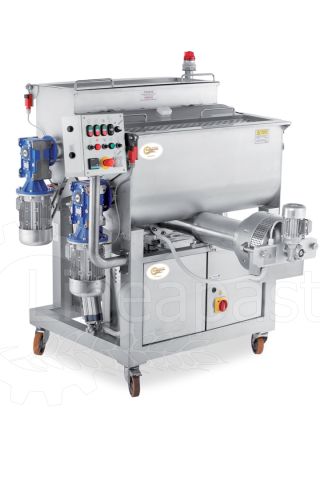
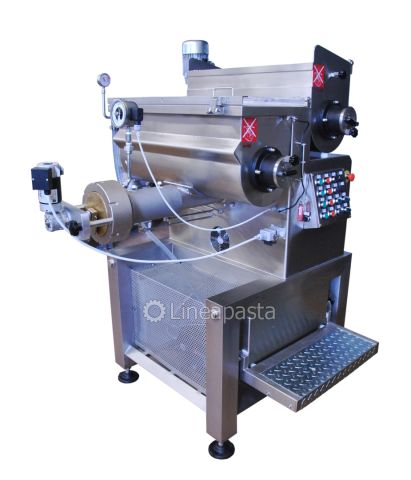
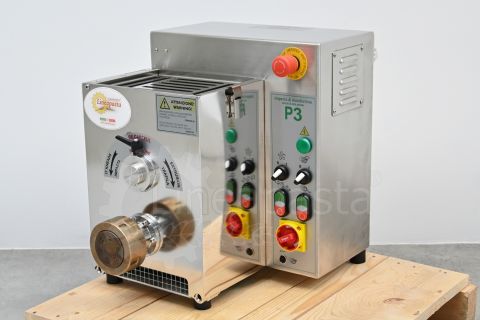
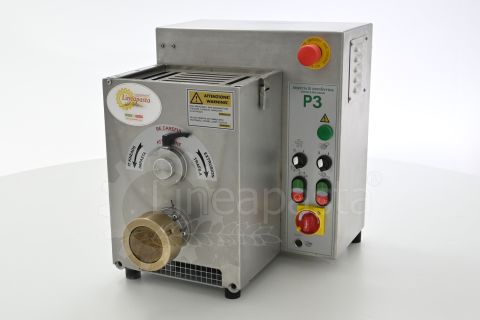
What is a pasta press / extruder and how does it work?
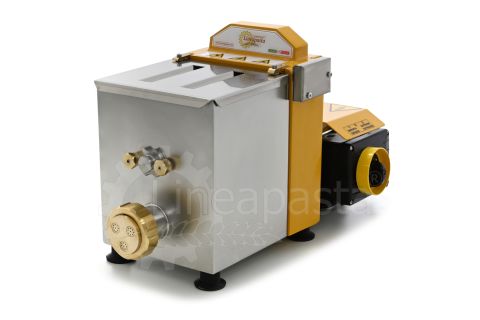
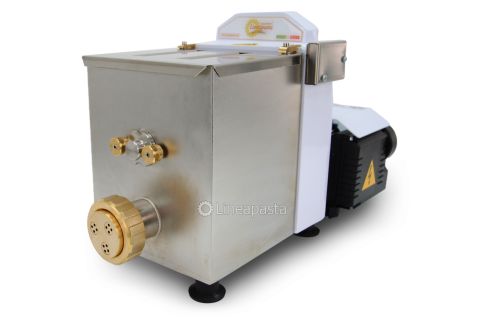
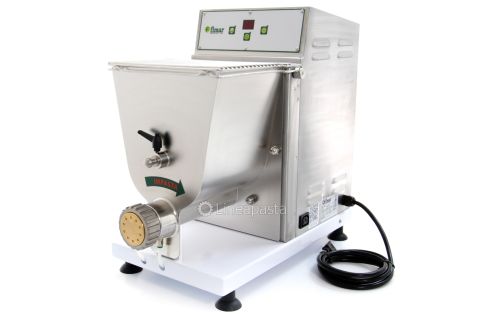
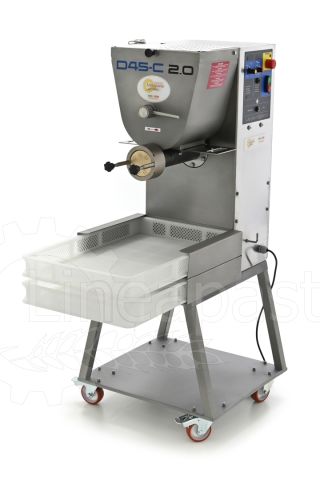
Pasta presses / extruders are machines designed to facilitate the production of fresh pasta. The simplest ones allow for small quantities for home use, while professional and industrial models are designed for restaurants, delicatessens, and pasta factories that require continuous and rapid production.
These machines operate by mixing dry ingredients (flour, semolina) with liquid ingredients (water and/or eggs), transforming them into a floury dough. Once the dough is ready, it is pushed by a screw feeder towards a die, a matrix that shapes the desired type of pasta. By changing the die, different shapes can be obtained: spaghetti, fusilli, penne, macaroni, caserecce, and many others. Use is quite intuitive: install the correct die, add the ingredients to the mixing vat, start the mixing cycle, and let the machine extrude the product. Some models cut the pasta automatically using variable-speed electronic cutters, while others require manual cutting. Once produced, short pasta is collected in boxes or trays, while long pasta is arranged in nests on frames or pasta racks to prevent sticking.
Main types and differences
First, it's important to distinguish between manual and electric presses/extruders.
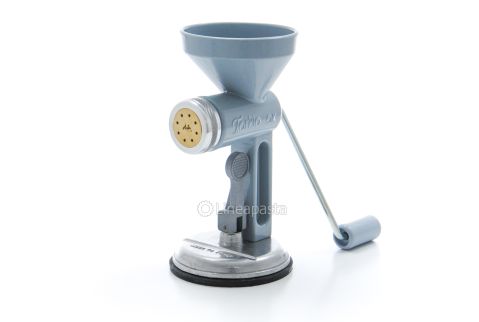
Manual presses (often also called "Torchi") use the strength of the operator's arms to push the dough through the die; each turn of the lever applies slow, constant pressure to the dough, allowing to obtain for the most typical shapes, such as bigoli, passatelli, or maccheroni. Since these are manual machines, their use is limited to extremely small production runs, such as those at home.
Unlike manual models, electric ones use a motor to drive the auger and the mixing shaft. The rhythm is uniform, ensuring a uniform pasta consistency and thickness.
Electric pasta presses can be classified into the following broad categories:
Home Presses - small and compact, but limited
Home presses are designed for small-scale production at home or in kitchens where fresh pasta is an occasional treat, not a continuous production. They are perfect for home kitchens, agritourism businesses, or small catering establishments.
They are compact, lightweight, easy to handle and clean. They allow you to produce short pasta such as maccheroni or fusilli, spaghetti, tagliolini, and lasagna sheets. The dies can be made of brass with bronze or teflon inserts. They only work well for short sessions, as the motor is not designed for prolonged use.
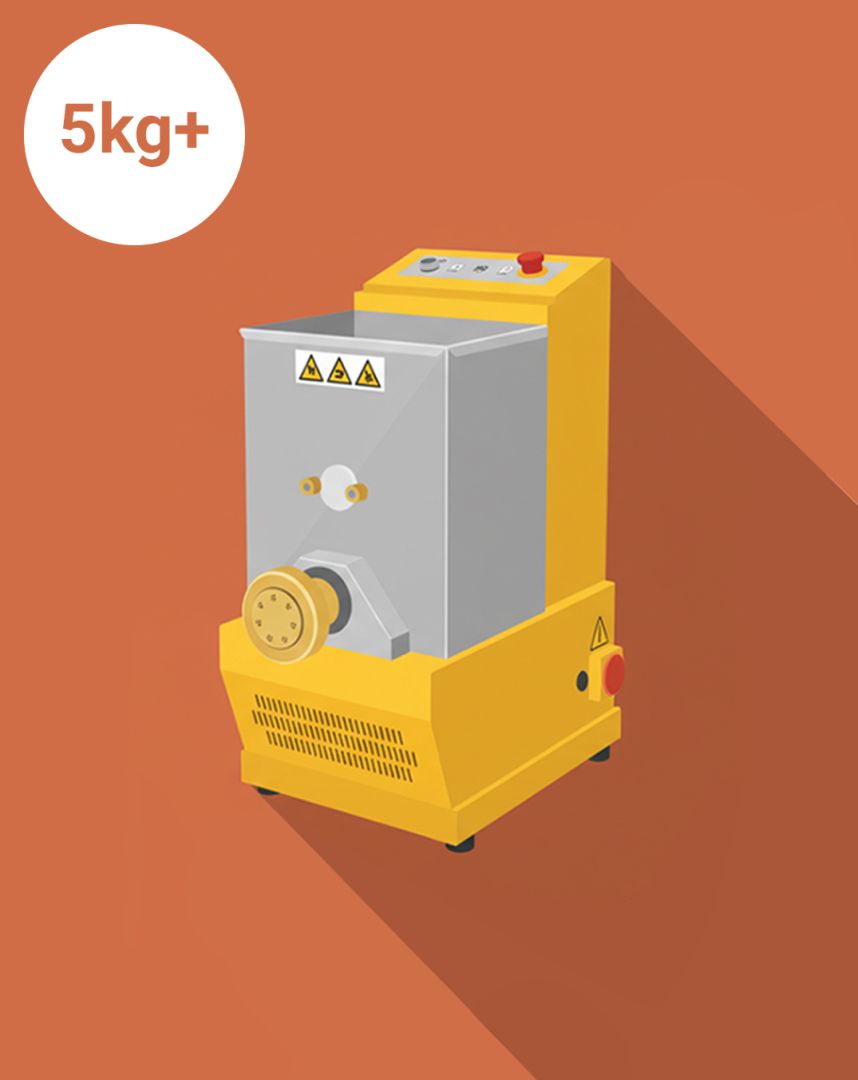
Professional Pasta Presses - the world of restaurants and delicatessen
When production increases and becomes a daily occurrence, one switches to professional pasta presses, typical of restaurants, delicatessens, or small artisanal workshops. They have a larger dough vat, usually made of stainless steel, and can easily handle significantly larger volumes of dough than home presses. These machines are no longer limited to traditional pasta shapes: with optional accessories, they can also produce ravioli and/or gnocchi.
The motor is more robust, and extrusion is more stable and continuous. Extrusion head cooling systems begin to appear, which maintain a low temperature to avoid altering the color and structure of the pasta.
They are generally more expensive, heavier, and require more space than home-use versions. For ease of movement, they can be placed on special trolleys for transport within the kitchen/workshop.
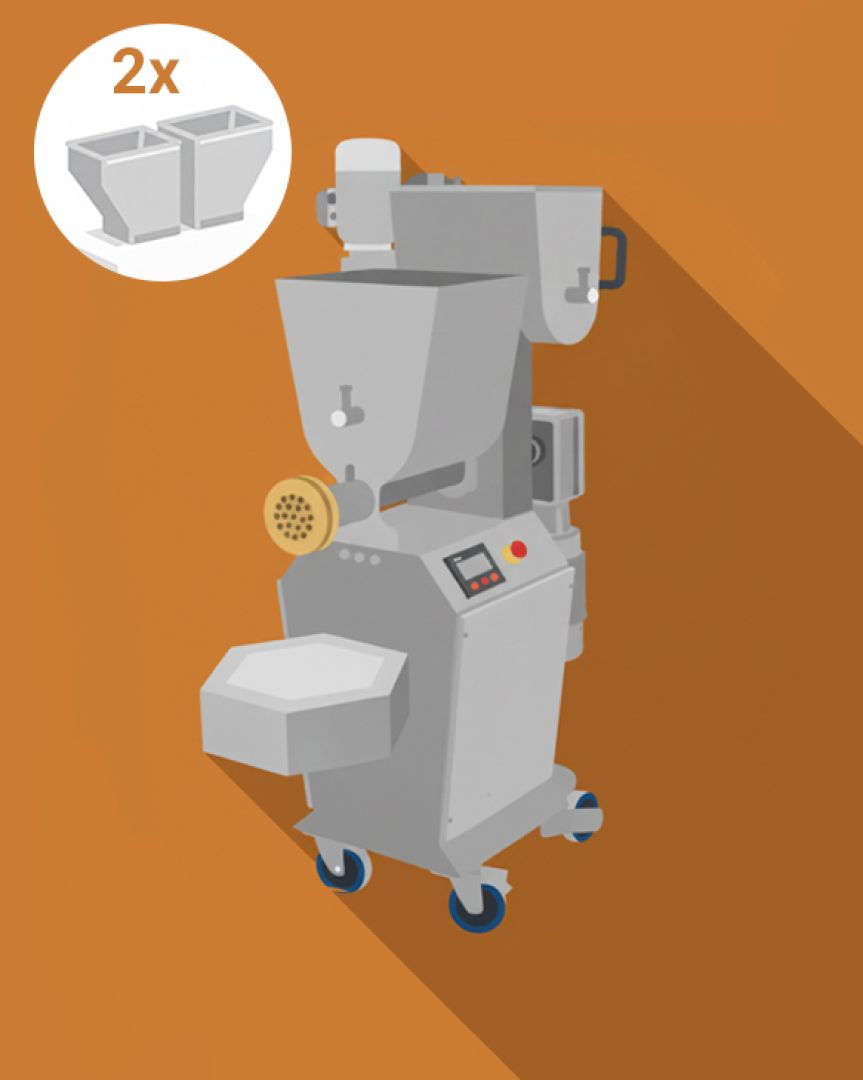
Industrial presses - the level of real pasta factories
At the higher end are industrial presses, used in real pasta factories. These presses are generally connected to conveyor belts, pre-drying systems, pasteurizers, automatic flour loading hoppers, and computerized control panels. The machine never stops and can produce any type of pasta. To operate, they require a three-phase power supply, adequate space, safety systems, scheduled maintenance, and trained personnel.
Pasta machine components
A pasta machine, whether it is a small benchtop press or an industrial extruder, is a collection of mechanical elements that work in harmony to transform simple ingredients into a smooth, elastic, and well-shaped finished product. Each component has a specific function and significantly contributes to the quality of the resulting pasta.
The heart of the entire machine is the motor, which generates the movement necessary to operate both the kneading arm and the extrusion screw. In smaller models, it's usually a single-phase electric motor, while in professional and industrial machines, it's a more powerful three-phase motor, often controlled by an inverter that regulates the speed.
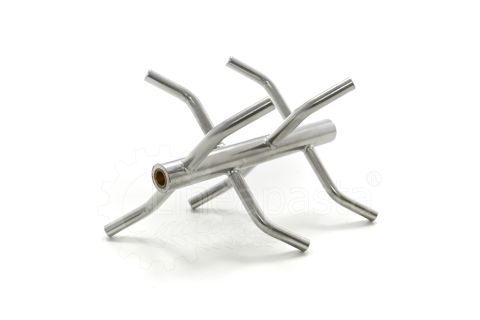
Then comes the kneading vat, a container usually made of stainless steel that holds the ingredients during the initial mixing phase. Inside, the kneading shaft moves, a steel arm that rotates slowly, blending the flour and liquid ingredients until they form a compact, dry dough.
In single-vat machines, the dough must be kneaded first, and once this phase is complete, the extrusion phase can begin. However, there are also double-vat models that can knead the ingredients in the upper vat and simultaneously extrude from the lower vat; this type of processing is called "continuous cycle."
From the vat, the dough passes into the extrusion cylinder, where the auger, a endless screw, gradually pushes the dough towards the die, compressing it and making it homogeneous. The material is always metal, often stainless steel or bronze, to withstand wear and high pressure. During this phase, the dough undergoes a combined action of pressure and friction that determines its final compactness and density.
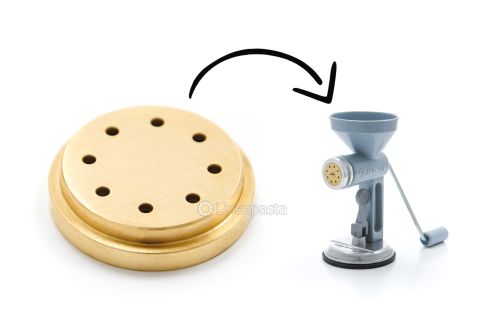
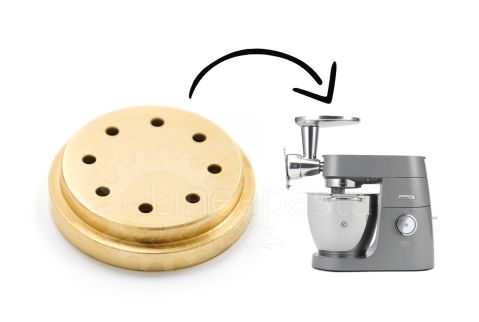
At the end of the extrusion cylinder is the head of the machine, which houses the die, the matrix that gives the pasta its shape. The die is a perforated disk into which the dough is forcefully pushed, resulting in the desired shape: round for spaghetti, rectangular for tagliatelle, hollow for penne and rigatoni. Dies are made of brass with bronze or teflon inserts. Those with bronze inserts produce a rougher and more porous pasta, ideal for holding sauces, while dies with teflon inserts produce a smoother and shinier pasta, more suitable for certain shapes or for productions where aesthetic regularity is important. Some extrusion heads are equipped with a water or air cooling system, essential for maintaining a constant temperature and preventing the dough from overheating during continuous processing.
Once the pasta exits the die, it is cut to the desired length. This operation can be done manually using a scraper or kitchen knife, or with the aid of a variable-speed electronic cutter. This allows different shapes to be obtained from the same type of die (for example, pacchero can be transformed into calamarata) simply by adjusting the cutting speed.
Another essential component, often invisible but crucial, is the cooling system. During extrusion, friction between the auger and the dough generates heat, and excessive temperatures could alter the color and consistency of the pasta, compromising the quality of the product.
Professional and industrial machines therefore include cooling circuits that maintain a constant temperature of the head and shaft, allowing for regular extrusion and consistently uniform pasta.
Every component of a pasta machine works in synergy with the others: the motor generates the power, the shaft kneads, the auger compresses, the die shapes the pasta, the knife finishes, and the cooling system keeps everything under control. The final result depends on the balance of these elements, the precision with which they are designed, and the care with which they are maintained. It is in this combination of mechanics and craftsmanship that the magic of true pasta presses lies, capable of transforming a few simple ingredients into a product that embodies tradition, technique, and art.
Ventilation and water cooling, two fundamental components
One of the most important aspects of ensuring consistent pasta quality is temperature control during extrusion. Entry-level or semi-professional machines often use external ventilation, consisting of fans positioned near or below the extrusion head. This system helps dissipate the heat generated by the friction of the dough on the auger, preventing the pasta from overheating and losing elasticity or changing color. It's a simple, economical solution, and sufficient for short or non-continuous production runs, but it doesn't always maintain a stable temperature if the machine operates for many hours at a time.
Water cooling, present in many professional presses and an indispensable feature in industrial machines, is a different matter.
Essentially, small pipes circulate around the extrusion cylinder, through which water flows from a tap. The water travels through the small pipes, maintaining the metal's temperature constant and thus preventing the mixture from overheating, dehydrating, or thawing or altering the gluten structure. In addition to preserving the organoleptic characteristics, this system allows for long production runs without any loss of quality. However, it requires a water connection or possibly tanks in the case of external water cooling.
Considerations on using a press / extruder versus a sheeter
Although the press represents a modern and versatile solution, its use shows some disadvantages when compared to a traditional sheeter, especially when it comes to the quality of the dough and the artisanal feel of the product.
The press processes the dough through a screw that forcefully pushes it through the die: this process, while efficient, subjects the dough to a more intense mechanical action that can heat it, partially compromising the elasticity of the gluten and the natural porosity of the pasta.
Aesthetics also play a role. The pasta obtained from the press is very uniform, with perfect geometry and regular thickness. This is an advantage in industrial settings or in restaurants seeking repeatable standards, but it can be a limitation for those who focus on traditional, irregular pasta. Pasta sheets made with a pasta sheeter, even when precise, retain slight variations in thickness, small air bubbles, and micro-irregularities that, during cooking, better absorb seasonings and impart a homemade flavor that's difficult to replicate with extrusion.
We can also mention the issue of culinary philosophy. Using a pasta sheeter is slower, requiring time, attention, and manual skill, but it allows for a direct connection with the dough and conveys the product's identity. The press, on the other hand, aims for efficiency, speed, and consistent production, reducing human intervention in favor of a more technical and programmable system. For some, this is an indispensable advance; for others, it represents a loss of authenticity.
Finally, from a practical standpoint, a press requires more time to clean and maintain than a sheeter because the auger, the mixing shaft, and possibly the mixing vat and dies must be dismantled and cleaned carefully, as dough residue can dry out and compromise hygiene or the quality of subsequent production.
Reviews