






 Italiano
 Français
 Español
 Deutsch
 AUD
AUD  BRL
BRL  CAD
CAD  CHF
CHF  CNY
CNY  GBP
GBP  INR
INR  JPY
JPY  KRW
KRW  RUB
RUB  THB
THB  USD
USD Crepes machines
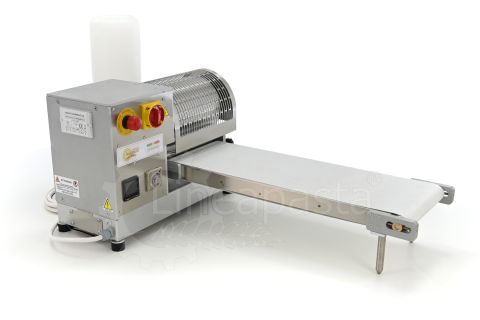
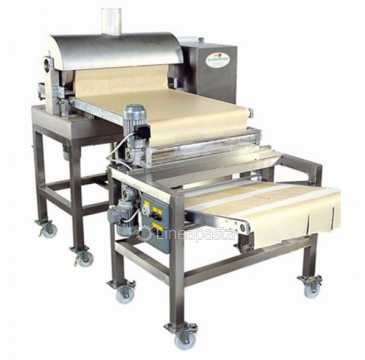
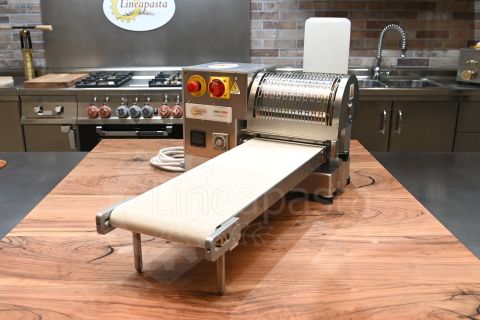
Professional crêpe machines
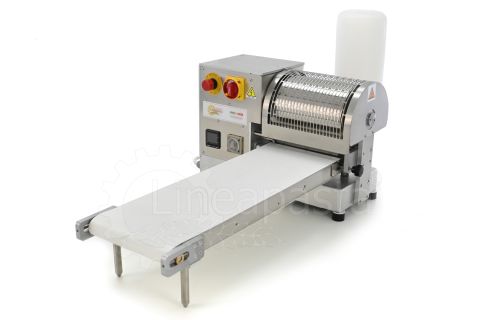
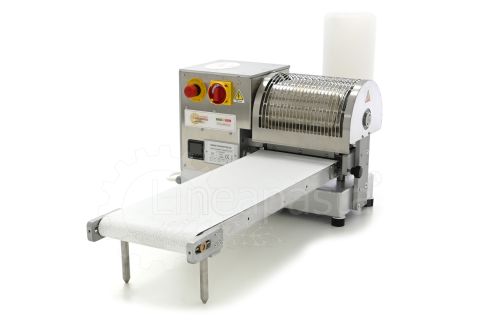
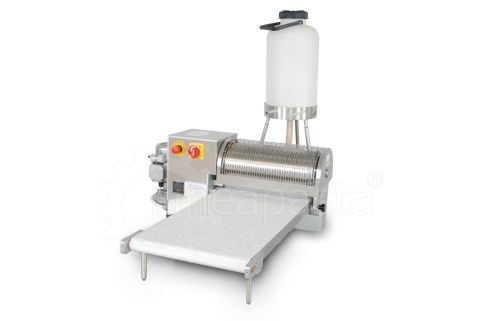
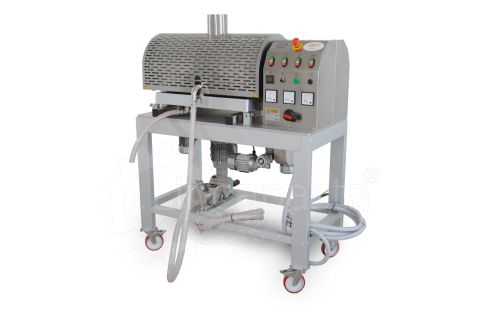
Crêpes machines represent a modern and highly efficient solution for the automated preparation of one of the most versatile and popular products in international culinary tradition. Designed for professional use, these machines produce perfect crêpes continuously and uniformly, significantly saving time and labor.
These semi-automatic machines are designed to meet the needs of restaurants, food service establishments, caterers and street food businesses that require high production and quality standards.
Origins and tradition of crêpes
Crêpes have ancient origins and are deeply rooted in European culinary tradition, particularly in France, where they have become a symbol of local gastronomy. Originally a simple preparation made from flour, eggs, and milk, they quickly spread thanks to their versatility and ease of preparation. Over the centuries, crêpes have evolved into numerous variations, both sweet and savory: from the classic ones filled with sugar, chocolate, or jam, to more substantial versions with cheeses, cured meats, vegetables, or sauces. Today, they are an internationally renowned product, capable of adapting to every culinary culture and occasion.
Technology and operation
Professional crêpe makers are automated systems that integrate three main phases: batter dosing, cooking and shaping the final product.
The process begins with loading the batter into a special container integrated into the machine. The basic recipe generally includes 00 flour, milk, and eggs, and this combination of ingredients produces neutral-flavored crêpes, suitable for both sweet fillings (such as spreads or jams) and savory ones (such as cured meats, cheeses, salmon, etc.).
From the container, the batter automatically flows into a collection tray located below, where it comes into contact with the preheated rotating roller, heated to temperature by electric heating elements and adjustable via a digital control panel.
The roller is coated in teflon to ensure maximum non-stick properties, and it is at this point that controlled distribution occurs; as it rotates above the collection tray, a uniform layer of batter is deposited on the hot roller. Depending on the shape of the roller, you will obtain round or square crêpes.
The density of the batter is a key parameter in determining the thickness of the crêpe, as it is not mechanically adjusted; the thicker the batter, the thicker the crêpe.
As the roller rotates, the crêpe gradually cooks on one side, ensuring uniform cooking across its entire surface.
Once the machine has completed a complete rotation of the roller, the cooked crêpe will automatically detach and be placed on a conveyor belt. It will then fall at the end of the belt onto a plate or picked up by the operator.
Using non-manual machines for crêpe production offers numerous operational advantages, including:
- High productivity: ideal for continuous, high-volume production
- Product uniformity: each crêpe maintains a consistent size and consistency
- Reduced processing times: automation of dosing and cooking phases
- Ease of use: designed to be intuitive even for non-specialized operators
- Resource optimization: less batter waste and better time management
Why do crêpes cook on only one side?
The fact that crêpes cook on only one side may seem counterintuitive, and it can give the impression of a "half-cooked" crêpe, but there's a technical explanation.
These automatic machines are designed to work with a generally fairly liquid batter that creates a very thin layer on the cooking roller. When the hot plate is immersed in the batter, the heat is so high that the surface in contact with the batter cooks immediately, and because the crêpe is very thin, the heat quickly travels through the entire thickness. In practice, even the top side "cooks" without ever directly touching a hot surface.
Furthermore, while the bottom side cooks by direct contact, the steam released by the batter itself comes into play on top. This steam helps complete the internal cooking, leaving the top side softer and lighter in color. And this is precisely the desired result: a flexible crêpe, easy to fold or roll without breaking.
Unlike pancakes, there's no need to flip it because it doesn't need to become soft or thick; in fact, double-cooking would make it drier and less elastic. Automatic crêpes take advantage of this feature to speed up the process: just one side, a few seconds, and the crêpe is ready.
When making them in a pan at home, for example, the reason for flipping them is more to ensure they're golden brown on the other side, rather than a real need for complete cooking.
Production formats: round and ribbon
Another strength of automatic crêpe makers is the ability to produce products in different shapes, adapting to production and commercial needs. In addition to the classic round crêpes, available in various sizes, some models allow for continuous "ribbon" production.
In this case, the batter is cooked in a linear and continuous fashion, creating a uniform sheet that can then be cut. Thanks to timers and integrated cutting systems, you can precisely set the desired lengths and widths, obtaining standardized portions ready for a variety of sweet and savory applications.
Materials and construction quality
On Lineapasta.com, you'll find the best crêpe makers, made with high-quality materials and designed to ensure durability, reliability, and ease of cleaning. The cooking surfaces are non-stick or treated to prevent batter from sticking, while the frames are constructed of stainless steel to ensure durability and compliance with hygiene standards.
Each component is designed to withstand intensive use, maintaining high performance over time.
This category offers solutions suitable for both small businesses and more structured production environments, with models capable of adapting to every professional need.
Reviews